Woven Emotions is a self-initiated, three-part artistic research project exploring the relationship between emotional experience, personal and cultural memory, and processes of transformation.

Woven Emotions is a self-initiated, three-part artistic research project exploring the relationship between emotional experience, personal and cultural memory, and processes of transformation.
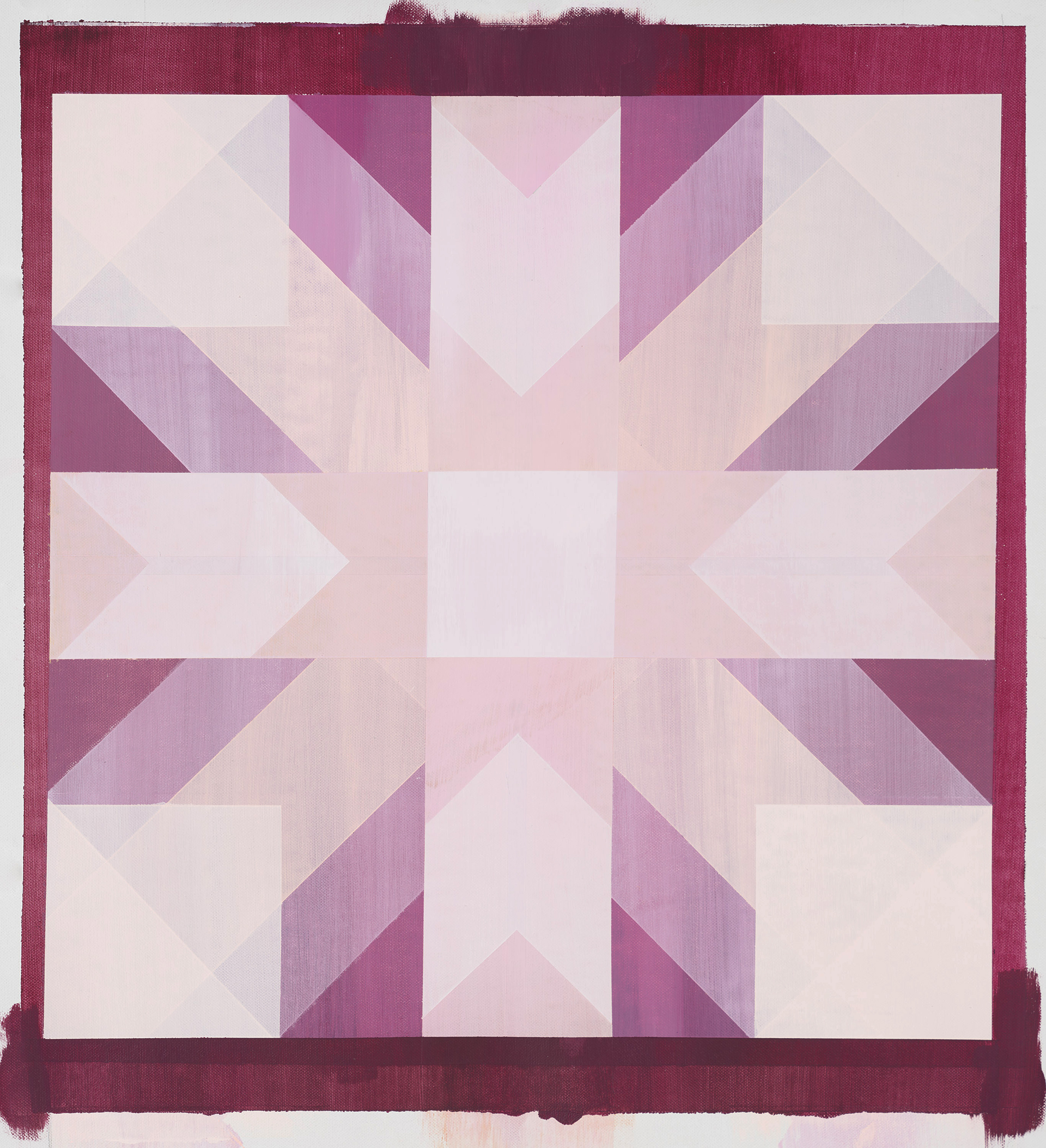
The starting point of this research was an experience of emotional overlap. At a certain point, different emotions became so intertwined that I could no longer clearly distinguish where one ended and another began. This led me to think about the human being not as a fixed or coherent entity, but as something constantly shifting – a layered, changing structure in which experiences, emotions, memories, and external influences intersect and transform one another.
The image of weaving became a way of thinking about this condition. Individual threads may remain distinguishable, while at the same time becoming part of something larger and more complex through their interconnection. This connection led me towards textile traditions, where individual threads come together to form structures that carry far more than their material presence. Through patterns, techniques, and symbols, textiles can hold traces of cultural memory and shared meaning, while remaining shaped by the hands and circumstances of those who make them.
My initial work explored this idea through painting. I was interested in whether overlapping emotional states could be translated into a visual language without reducing them to fixed symbols or predetermined meanings. Rather than representing an emotion through a particular colour or form, I wanted the image to emerge from the emotional state itself.
The First Paintings
In the first phase of the research, I attempted to bring this immediacy directly into the painting process. I produced two paintings in which I tried to respond to my emotional state while working, allowing changes in mood and moments of uncertainty to become part of the image.
This approach did begin to work. The paintings were affected by the emotional states I experienced while making them. At one point, for example, a difficult day led me to cover part of a painting with layers of brown and grey. Rather than correcting or removing these changes, I decided to leave them. The new layer became part of the work precisely because it reflected what had happened in the process.
At the same time, however, I became increasingly aware of a contradiction within the method itself. Although I was allowing emotions to enter the work, the process of painting remained highly controlled. Mixing colours, making decisions, waiting, layering and revising all introduced a degree of mediation between the emotional impulse and the mark. The question therefore shifted. It was no longer only about how to allow emotion into the work, but also about what kind of conditions might allow an emotional response to emerge more immediately.

I struggled for a long time with perfectionism in my work and rarely allowed myself to fail. In this painting, I resisted the impulse to “save” the work during the process and chose instead to follow the original idea to its end. It was a difficult experience – almost every part of me resisted while working on it.
Only at the very last moment, after I had already documented the process, did I allow myself to transform it visually into harmony. The work became a process of breaking a pattern, both literally and psychologically.
This work continues the investigation into direct emotional expression. It emerged from a state of emotional heaviness that overshadowed an otherwise positive day. Rather than translating or resolving the feeling, the painting attempts to preserve the experience as it existed in the moment.

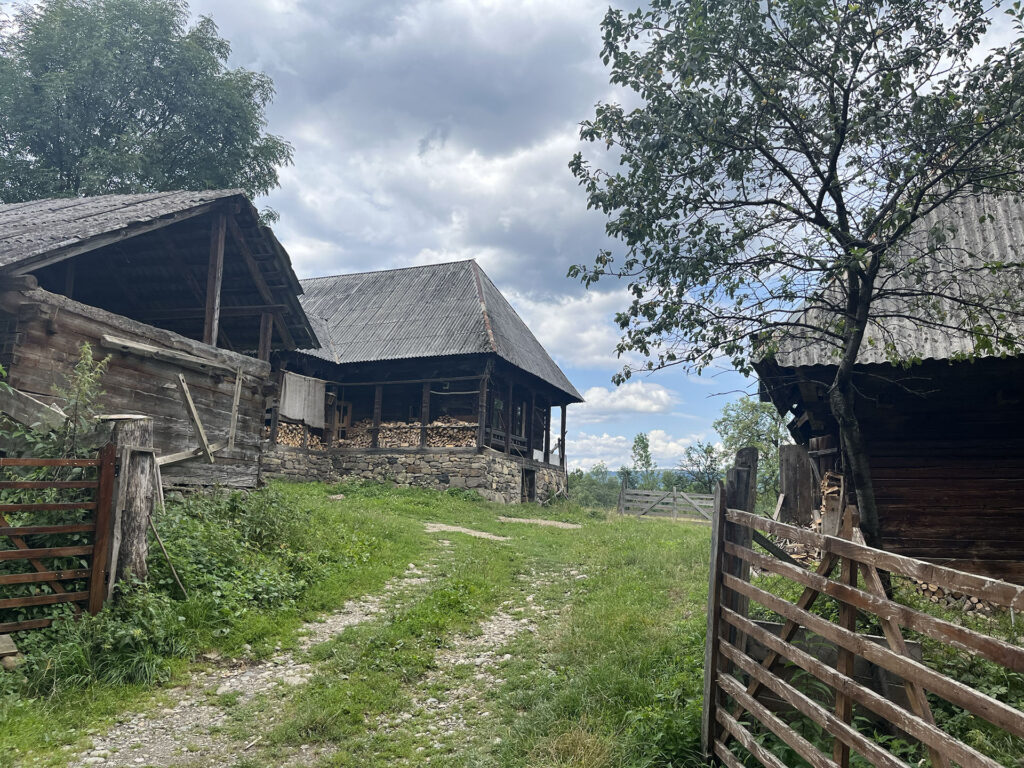
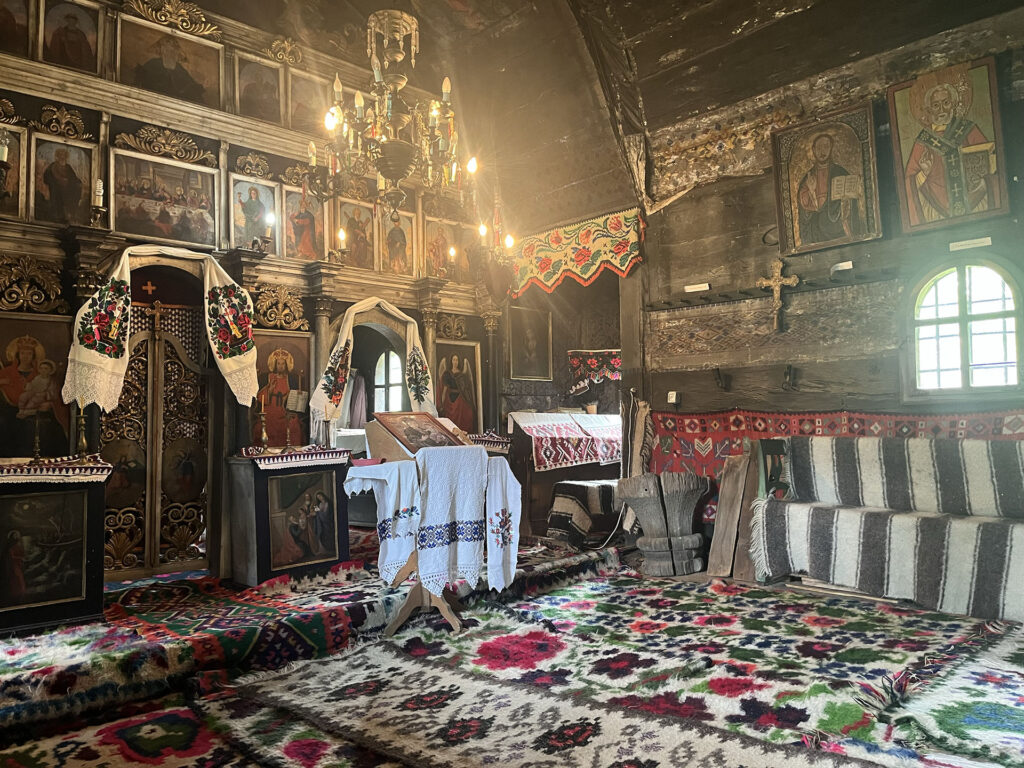
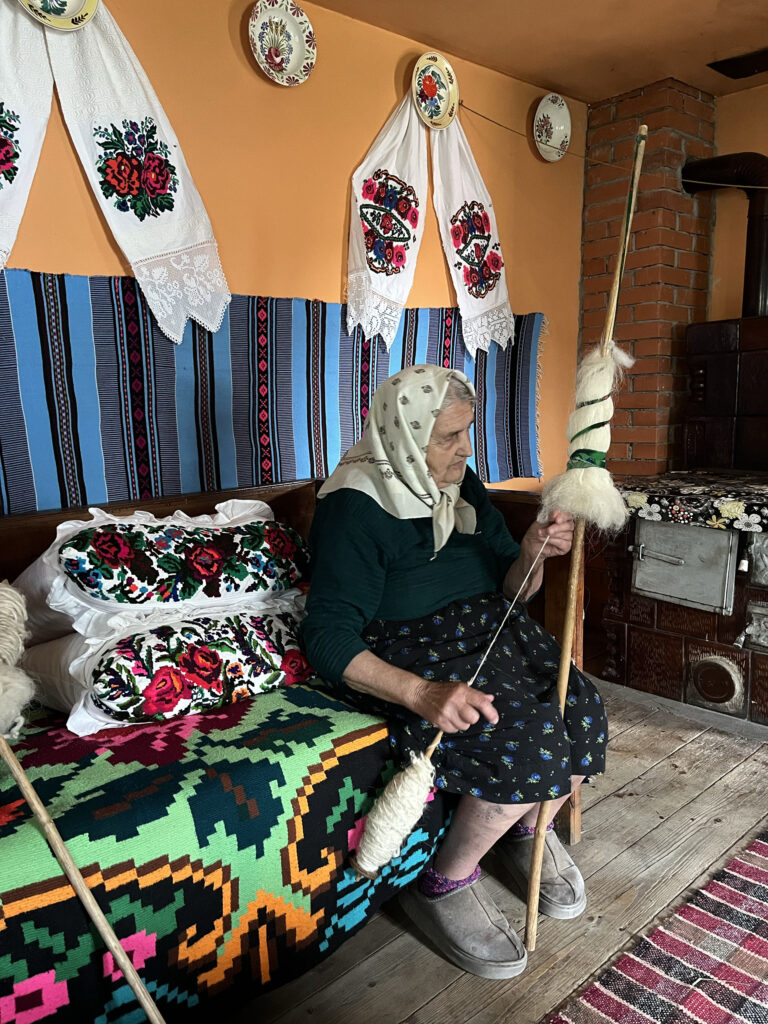
I initially travelled to the Transcarpathian region because of its rich textile traditions and the cultural significance embedded in its weaving and embroidery practices. I was interested in the possibility that these traditions might reveal a way of thinking about interconnectedness that could inform my own research – not by reproducing existing patterns, but by encountering another understanding of how meaning, material, and experience can become intertwined.
The journey, however, took the research in an unexpected direction.
An accident left me physically vulnerable and largely on my own. This experience unexpectedly opened up a different relationship to my emotions. I became aware of a sense of vulnerability and openness, but also gratitude, that I had not been able to access in the same way before. As the journey continued, I began to feel increasingly connected to myself and to my surroundings. Meeting people, having conversations, encountering a different culture, and simply being able to move freely created a strong sense of aliveness.
In Bucharest, this emotional openness became particularly significant. I was able to experience emotions not primarily through reflection or analysis, but through feeling them directly. Coming to terms with the truth of a relationship eventually brought me to a point where I could no longer distance myself from what I was experiencing. Instead, I allowed the pain and the darker, more difficult emotions surrounding it to be fully present.
At the same time, my way of working changed considerably. I began making sketches every day, working rapidly and extensively with charcoal and other drawing materials. Instead of focusing on individual, resolved paintings, I produced a large number of studies and drawings. The speed of this process allowed me to respond more directly to what I was feeling. The immediacy I had initially tried to achieve through painting began to emerge more naturally through drawing.
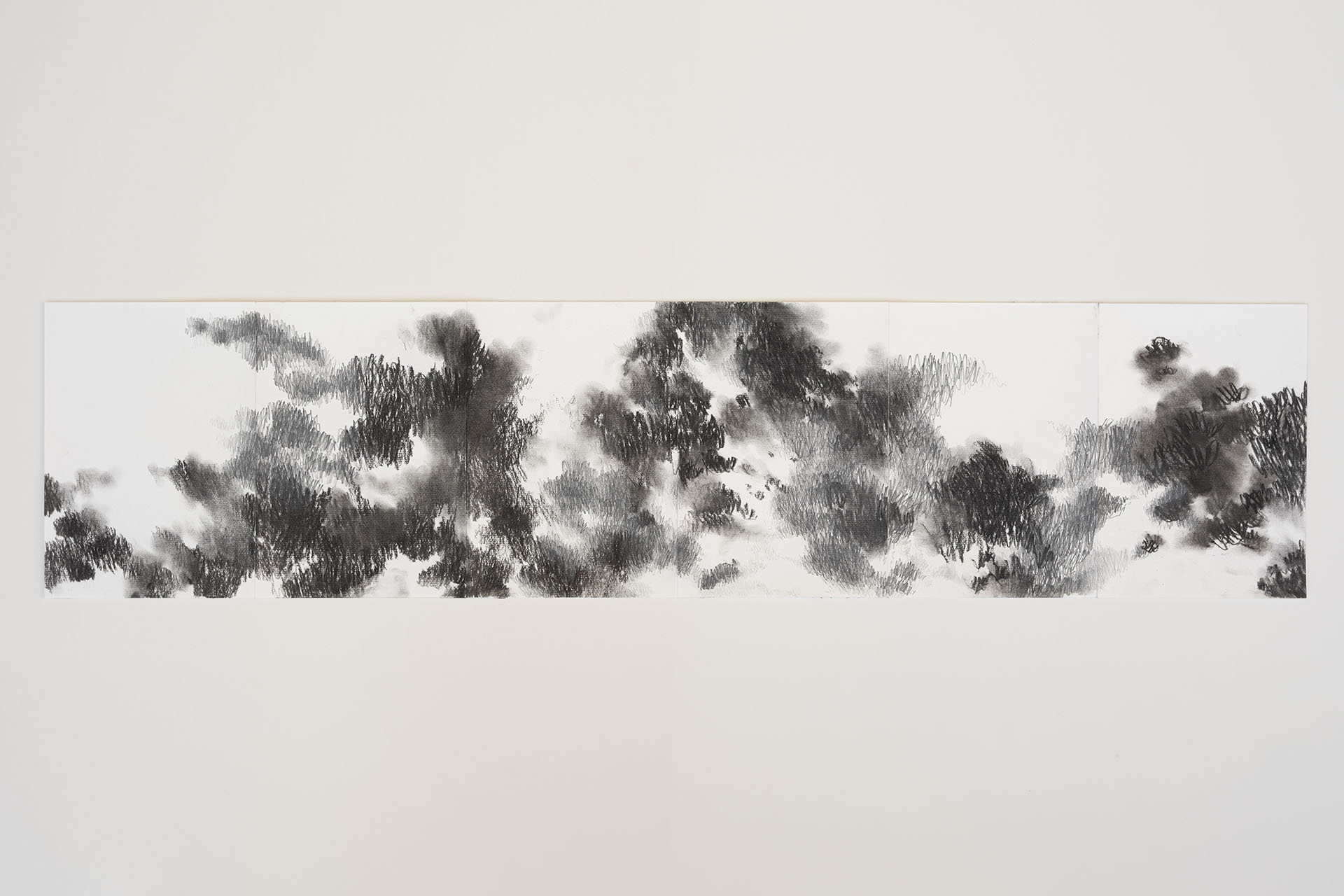
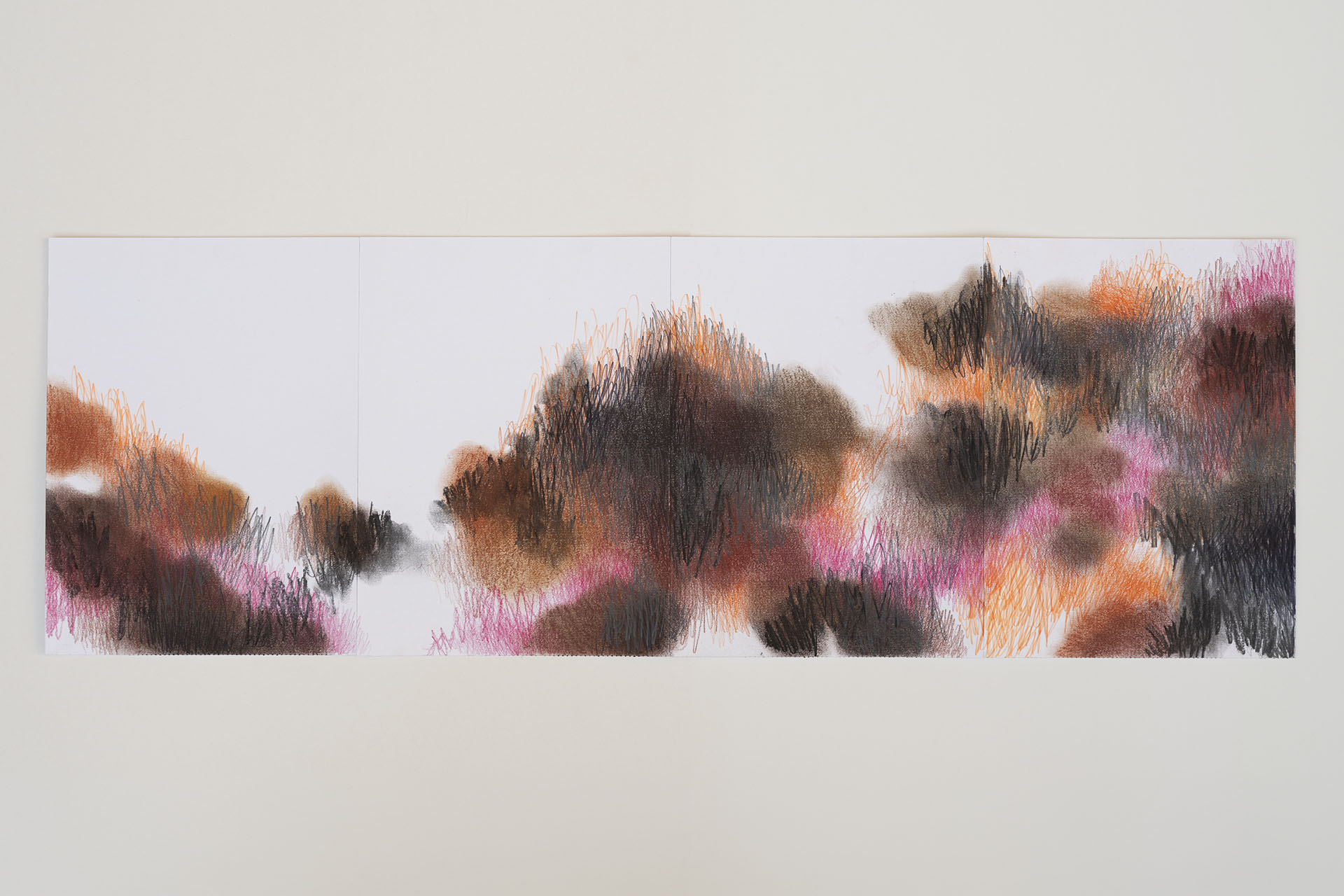
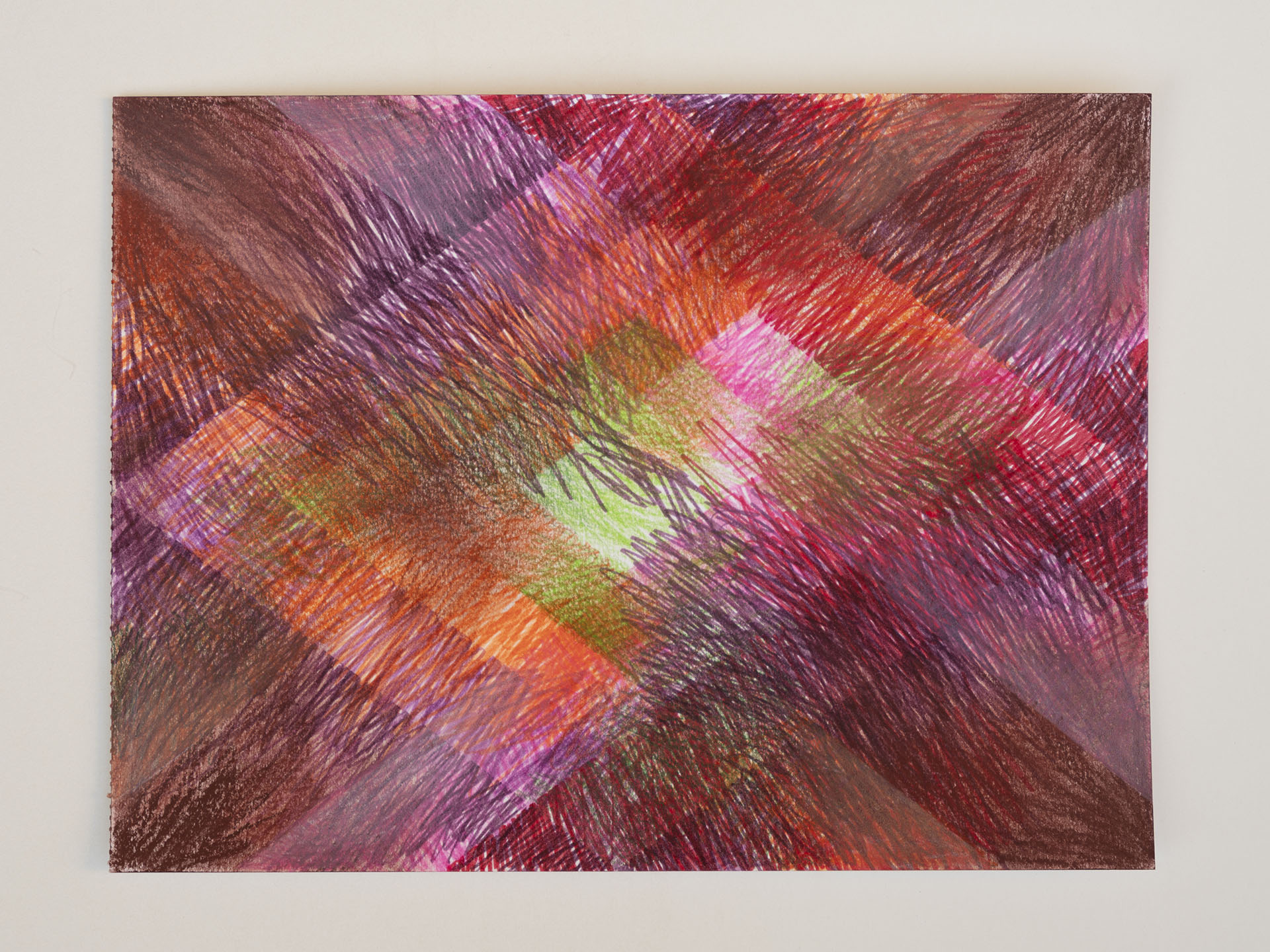
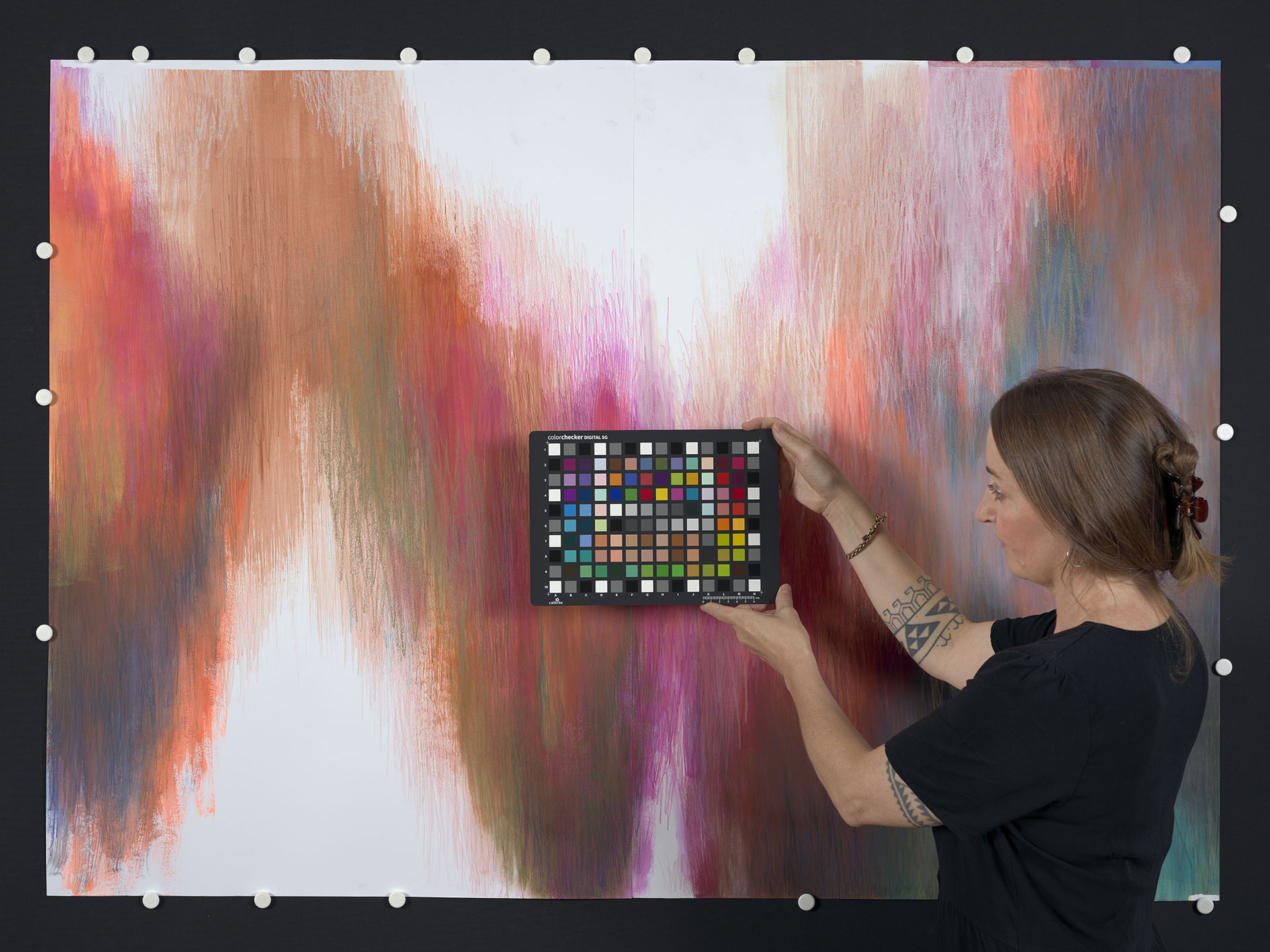
When I returned to the studio, I brought this changed relationship to emotion and process with me. I began to understand that immediacy was not simply a question of allowing myself to express an emotion, but also of creating the right conditions for the emotion to enter the work without being overly mediated by technique.
This leads me increasingly towards drawing and larger formats. Drawing offers a different physical relationship to the surface: it is faster, more direct, and allows a mark to be made before it can be overly considered or corrected. The shift from painting to drawing therefore became more than a change of medium; it became part of the research itself.
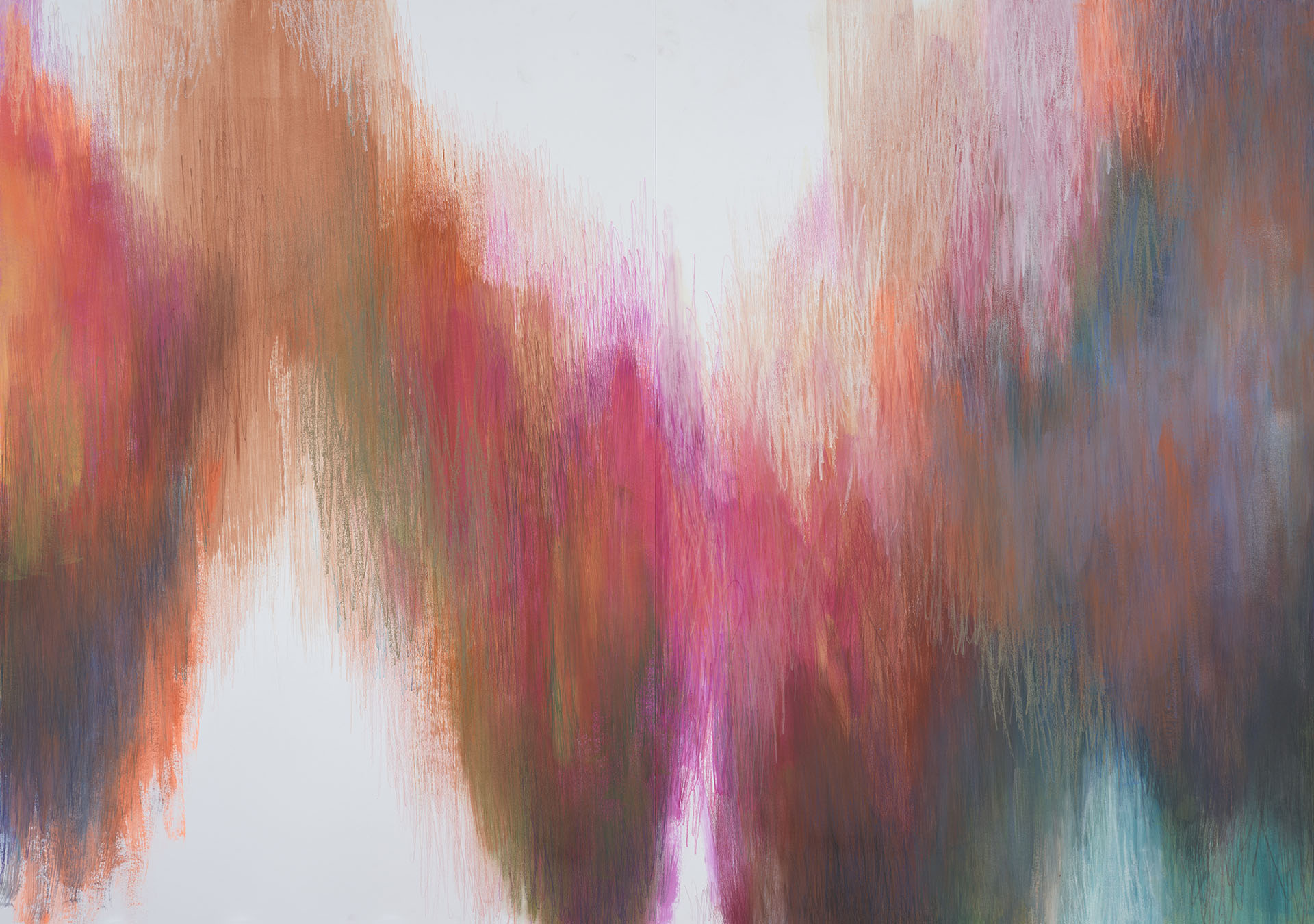
The resulting works bring together seemingly opposing qualities. Hard, raw and sometimes almost aggressive marks coexist with softer, more diffuse passages. The drawings can appear immediate and uncontrolled up close, while from a distance they can take on an almost fluid, atmospheric quality. Rather than resolving these contradictions, I am interested in allowing them to remain present within the same work.
The research is still developing. What began as an attempt to understand and represent overlapping emotional states has gradually evolved into an exploration of how directly these states can be expressed through the act of making, how the medium can enable or limit this immediacy, and how releasing control can create space for a more authentic response.
Woven Emotions will continue to develop until the end of 2026.